The UAE’s hospitality sector stands at the intersection of luxury expectations and technological innovation. As international travelers increasingly demand seamless, personalized experiences, hotels and resorts across Dubai, Abu Dhabi, and beyond are embracing smart hotel design UAE to stay competitive. The challenge, however, extends beyond guest satisfaction—the region’s harsh climate and the need for operational efficiency demand intelligent solutions that adapt in real-time.
This is where IoT hospitality interiors Dubai enters the conversation. Smart technology integration transforms how hotels operate, from energy management systems that combat extreme heat to AI-powered services that anticipate guest needs before they ask. For interior designers and hospitality operators in the UAE, understanding and implementing these technologies is no longer optional—it’s essential.
At Design Core Interiors, we recognize that truly exceptional hospitality spaces merge architectural elegance with intelligent systems. This comprehensive guide explores how AI and IoT technologies are revolutionizing interior design in UAE hospitality environments, creating spaces that are smarter, more sustainable, and deeply human-centered.
The UAE Hospitality Challenge: Climate, Comfort, and Connection
Understanding the Environment
The UAE’s hospitality sector faces a unique paradox. While the region boasts world-class luxury brands and cutting-edge infrastructure, the harsh climate creates interior design challenges that demand innovative solutions. Extreme temperatures exceed 50°C during summer months, coupled with occasional sandstorms and high humidity. These conditions place extraordinary pressure on HVAC systems and make maintaining comfortable, naturally-connected indoor environments exceptionally difficult.
Traditional interior design approaches often result in sterile, climate-controlled spaces that feel disconnected from the vibrant outdoor environment. Guests and employees alike experience the psychological impact—a sense of isolation from nature despite staying in one of the world’s most dynamic regions.
The Employee Wellness Crisis
Beyond guest comfort, hospitality facilities struggle with employee wellness. Staff working in disconnected indoor environments report higher stress levels, reduced productivity, and increased absenteeism. Hotels need workspaces that inspire wellbeing while maintaining operational efficiency. This is where intelligent interior design becomes crucial.
What Is Smart Hotel Design UAE?

Defining Intelligent Hospitality Interiors
Smart hotel design UAE refers to the strategic integration of interconnected IoT devices, AI systems, and responsive architectural elements that work together to create adaptive, personalized guest experiences while optimizing operational efficiency.
Unlike traditional hotel design that treats spaces as static environments, IoT hospitality interiors Dubai approach design as a dynamic ecosystem where:
- Rooms respond to occupancy in real-time
- Systems learn guest preferences and adapt accordingly
- Energy consumption adjusts automatically based on usage patterns
- Safety and security systems operate predictively rather than reactively
- Employee workspaces promote wellness through biophilic design and smart climate control
Core Components
- Connected Guest Rooms
Modern guest rooms are equipped with integrated systems allowing guests to control lighting, temperature, curtains, and entertainment through voice commands or mobile apps. These systems remember individual preferences—when a returning guest checks in, their ideal room temperature, lighting ambiance, and entertainment preferences are already configured.
- IoT Occupancy & Energy Systems
Motion sensors and occupancy detectors monitor room usage continuously. When spaces are unoccupied, systems automatically:
- Dim or switch off lighting
- Adjust HVAC settings to reduce energy consumption
- Manage water usage in facilities
This intelligent automation has delivered 15-30% energy savings in major hotel chains without compromising guest comfort.
- AI-Powered Guest Services
Chatbots and virtual concierges operate 24/7, handling bookings, service requests, and guest inquiries in multiple languages. AI systems analyze guest behavior patterns, enabling staff to deliver hyper-personalized services and predictive recommendations.
- Predictive Maintenance Systems
IoT sensors embedded throughout facilities continuously monitor equipment performance, HVAC systems, plumbing infrastructure, and structural elements. Data analytics identify potential failures before they occur, reducing emergency repairs by up to 30% and extending equipment lifespan significantly.
AI and IoT Applications in UAE Hospitality Interiors
Smart Guest Room Experience
Personalized Climate Control
The UAE’s intense heat demands sophisticated climate management. Smart HVAC systems learn guest preferences during their first visit and automatically replicate those settings during subsequent stays. Guests arriving on scorching summer days find their rooms already cooled to their preferred temperature, eliminating the uncomfortable initial hours of adjustment.
Adaptive thermostats work alongside advanced humidity sensors, recognizing that Dubai’s coastal humidity differs dramatically from desert regions inland. The system continuously micro-adjusts temperature and humidity levels, maintaining comfort while reducing energy waste.
Lighting Intelligence
Circadian rhythm-aware lighting systems adjust color temperature and intensity throughout the day and night, promoting healthy sleep cycles and reducing fatigue from long-haul travel. Guests can override automation with voice commands or their smartphone, but intelligent defaults ensure optimal ambiance without manual intervention.
Voice-Activated Control
Current projections indicate 78% of hoteliers expect voice-enabled controls to become standard by 2025. Guests accustomed to home voice assistants appreciate the seamless transition—simply speaking commands controls room elements without learning complex new interfaces.
Energy Efficiency & Sustainability
Occupancy-Based Automation
IoT motion sensors detect when guests have departed their rooms. Sophisticated algorithms distinguish between brief absences (guest in bathroom) and extended occupancy gaps. When rooms are genuinely vacant, integrated systems:
- Reduce HVAC operation to baseline levels
- Switch off non-essential lighting
- Lower water heater settings
- Disable entertainment systems
Hotels implementing comprehensive IoT strategies report 20-30% reductions in energy consumption, directly lowering operational costs while advancing sustainability commitments.
Predictive System Maintenance
Rather than reactive repairs, smart hotels use data analytics to anticipate failures. HVAC systems showing performance degradation are flagged for preventive servicing before guest experience suffers. This approach has helped major international chains reduce emergency maintenance calls by 30% while extending system lifespans by years.
Guest Experience Personalization
Mobile Check-In and Keyless Entry
AI-enhanced property management systems enable guests to check in entirely through mobile apps, bypassing front desk lines entirely. Digital room keys replace physical cards—guests access their rooms using smartphone apps or biometric authentication. This contactless approach accelerates arrival experiences and enhances security.
Data-Driven Recommendations
AI analyzes guest booking history, previous room selections, dining preferences, and activity patterns. This intelligence enables front desk staff to provide personalized recommendations—suggesting restaurants matching cuisine preferences, recommending activities based on previous interests, or anticipating service requests before guests need to ask.
24/7 Multilingual Support
AI chatbots provide instant responses to guest inquiries in multiple languages. Beyond simple Q&A, these systems integrate with booking systems, concierge services, and facility information, enabling guests to resolve issues immediately without waiting for staff availability.
Addressing the UAE’s Climate Challenge Through Smart Design
Biophilic Integration with Technology
The harsh climate makes outdoor spaces inaccessible during peak heat hours. Smart interior design compensates through biophilic elements enhanced by IoT technology:
- Green walls and moss walls requiring zero maintenance or water thanks to preserved moss technology—perfect for UAE’s dry climate
- AI-controlled natural lighting systems that maximize daylight penetration while filtering UV radiation
- Smart irrigation systems for interior plants that adjust watering based on humidity sensors and seasonal changes
- Water-efficient feature walls that create natural ambiance without straining scarce water resources
These biophilic spaces, enhanced by intelligent climate control, create the psychological feeling of connection to nature despite extreme outdoor conditions.
Advanced HVAC and Air Quality Management
Smart hotels leverage advanced MEP systems (Mechanical, Electrical, Plumbing) specifically designed for UAE conditions. Integrated air quality sensors continuously monitor CO2 levels, particulate matter, and humidity, automatically triggering ventilation adjustments. This maintains optimal air quality—crucial for employee wellness and guest satisfaction.
Intelligent zoning allows different areas to maintain distinct climate profiles. Guest lounges stay cooler during high occupancy, while unoccupied meeting rooms operate at minimal settings, reducing overall energy demand without sacrificing comfort where guests congregate.
Employee Wellness Through Intelligent Interior Design
Creating Restorative Work Environments
The hospitality industry’s intensive demands on staff require spaces that promote mental and physical wellbeing. Smart design addresses this through:
Wellness Zones with Technology Integration
Dedicated areas feature biophilic design elements—vertical gardens, moss walls, natural stone finishes—combined with IoT air quality monitoring and circadian lighting systems. Employees access spaces that genuinely promote stress reduction and mental clarity.
Flexible, Personalized Workspaces
Unlike rigid office layouts, smart hospitality interiors provide adaptable spaces. Employees can adjust lighting and temperature based on personal preferences. Motion sensors automatically optimize environmental conditions in break areas, creating micro-environments of comfort throughout the facility.
Mindfulness and Recovery Spaces
IoT-enhanced meditation rooms feature programmable soundscapes, variable lighting that supports relaxation, and temperature controls optimized for wellness. Smart systems ensure these spaces remain peaceful by detecting occupancy and restricting interruptions.
Predictive Staffing and Workload Management
AI systems analyze occupancy patterns and predict peak service periods. This enables intelligent staffing schedules and workload distribution, reducing employee burnout by aligning labor with actual demand patterns. When staff workload intensifies predictably, management can prepare accordingly rather than creating crisis-mode operations.
Real-World Smart Hotel Implementation Examples
Marriott International implemented IoT-powered HVAC systems throughout their properties, achieving 15% energy reductions while maintaining guest satisfaction scores. Their “Alexa for Hospitality” initiative enables voice control of room features in thousands of locations globally.
Wynn Las Vegas demonstrates how comprehensive IoT integration elevates guest experience. Amazon Echo devices in all rooms allow guests to control lighting, temperature, curtains, and entertainment through simple voice commands, creating an intuitive, effortless stay.
IHG Hotels deployed predictive maintenance IoT systems that cut HVAC-related service calls by 30%. This dramatic improvement freed maintenance staff to focus on proactive infrastructure enhancements rather than emergency repairs.
Hilton Honors revolutionized mobile guest services through their app, enabling digital check-in, room selection via interactive maps, and smartphone-based room access across over 80% of properties worldwide—fundamentally streamlining the arrival experience.
Implementation Considerations for UAE Hospitality Projects
Phase 1: Assessment and Strategy
Before implementing IoT and AI systems, hospitality operators should:
- Audit existing infrastructure to identify integration opportunities
- Define guest personas to understand which technologies add genuine value
- Assess climate control challenges specific to your property’s location and design
- Evaluate staff training needs to ensure smooth technology adoption
Phase 2: Technology Integration
Priority installations typically include:
- Smart climate control and occupancy sensors (highest ROI)
- Mobile check-in systems and digital keys
- Energy monitoring infrastructure
- AI chatbot implementation for guest services
- Predictive maintenance systems for critical MEP infrastructure
Phase 3: Data Analytics and Continuous Improvement
Successful smart hotels treat technology as an ongoing evolution. Data collected from IoT systems should inform design refinements, operational adjustments, and guest experience enhancements. Regular analysis of sensor data, guest preferences, and energy consumption patterns enables continuous optimization.
Design Best Practices for Smart Hospitality Interiors
Seamless Technology Integration
Technology should be invisible to guests—working intuitively in the background rather than demanding attention. This requires:
- Intuitive interfaces requiring minimal learning
- Voice and mobile controls as primary interaction methods
- Automatic systems handling routine adjustments
- Manual overrides always available for guest preference
Balancing Luxury and Technology
Smart hotels maintain sophisticated aesthetics while incorporating advanced systems. This means:
- Concealing visible technology (sensors embedded in architectural elements, hidden speakers)
- Using high-end materials that complement smart features
- Designing elegant interfaces that enhance rather than distract from luxury ambiance
- Integrating MEP systems thoughtfully rather than as afterthoughts
Climate-Adapted Material Selection
The UAE’s extreme conditions demand material choices that withstand heat, humidity, and dust while complementing smart systems:
- Durable natural stones (white marble, quartzite) that resist heat degradation and pair beautifully with modern technology
- Moisture-resistant finishes in bathroom areas with smart shower systems
- Low-maintenance materials compatible with automated climate systems
- UV-resistant fabrics for smart room-darkening systems
The Future of Smart Technology in UAE Hospitality
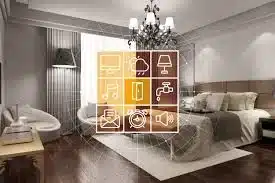
Emerging technologies promise even greater integration:
- Augmented Reality (AR) navigation systems helping guests explore properties intuitively
- Blockchain technology securing guest data and loyalty programs
- 5G connectivity enabling faster, more reliable IoT communication
- Robotics for autonomous room service delivery and facility maintenance
- Advanced AI enabling hyper-personalization at scale
The hospitality industry’s rapid technological evolution demands interior designers who understand both aesthetic principles and technical integration. At Design Core Interiors, we specialize in creating spaces where cutting-edge technology and timeless design principles merge seamlessly.
Conclusion
Smart hotel design UAE represents the future of hospitality interior design not as distant possibility but as present reality. The integration of IoT hospitality interiors Dubai with thoughtful, human-centered design creates spaces that transcend guest expectations while addressing the region’s unique climate and operational challenges.
For hospitality operators in the UAE and Kuwait, the question is no longer whether to implement smart technology, but how to implement it strategically, ensuring genuine value creation rather than technology for technology’s sake. When intelligent systems combine with exceptional design, employee wellness improves, operational costs decrease, guest satisfaction increases, and properties gain competitive advantage in an increasingly sophisticated market.
The hospitality interiors of tomorrow won’t just look beautiful—they’ll think, adapt, and anticipate. They’ll welcome guests with intelligent personalization while preserving the warmth and authenticity that define genuine hospitality.
Ready to transform your hospitality space with intelligent design? Design Core Interiors brings together architectural expertise, technical proficiency, and deep understanding of UAE market requirements. From concept development through complete implementation, we create hospitality environments that merge luxury, sustainability, and cutting-edge technology. Contact Design Core Interiors today for your smart hospitality project consultation.
Frequently Asked Questions About Smart Hotel Design and Hospitality Technology
Q1: How much does it cost to implement IoT and smart technology in a hospitality property?
A: Smart technology implementation costs vary dramatically based on property size, existing infrastructure, and technology scope. Basic systems (occupancy sensors, smart HVAC) might cost $500-1,500 per room, while comprehensive integration including AI services, predictive maintenance, and guest-facing mobile platforms can reach $2,000-3,500 per room. However, energy savings typically recover 30-40% of installation costs within 3-5 years. Design Core Interiors can provide detailed ROI analysis based on your specific property profile.
Q2: Will smart technology make my hospitality design feel impersonal or cold?
A: Not when implemented thoughtfully. The most successful smart hotels combine technology with warm, biophilic design elements. Smart systems work invisibly—adjusting temperature and lighting without visible devices. The guest experience feels more personal, not less, because systems adapt to individual preferences. The key is partnering with designers who understand both technology integration and human-centered design principles, ensuring technology serves guests rather than overshadowing hospitality warmth.
Q3: Is IoT technology suitable for small boutique hotels, or only large chains?
A: Smart technology scales beautifully from small boutique properties to massive resorts. In fact, boutique hotels often gain competitive advantage through smart personalization—smaller guest counts mean more detailed preference data and highly customized experiences. Many technology providers offer modular solutions allowing incremental implementation. Start with high-ROI systems like smart climate control and occupancy sensors, then expand as your operation and budget allow.
Q4: How does smart hotel design address the UAE’s harsh climate specifically?
A: The UAE’s extreme heat and occasional humidity demand sophisticated climate management. Smart systems with occupancy sensors and AI algorithms maintain comfort while dramatically reducing energy waste—critical given the region’s cooling demands. Biophilic design elements (green walls, natural materials) combined with intelligent lighting create psychological connection to nature despite extreme outdoor conditions. Advanced moisture and heat sensors prevent material degradation that’s accelerated by the harsh environment.
Q5: What training do staff need to operate and maintain smart hospitality systems?
A: Most guest-facing technology requires minimal staff training—systems are designed to be intuitive. However, maintenance and management teams need comprehensive training on backend systems, data analytics, and troubleshooting. Reputable technology providers offer ongoing support and staff education. A well-designed smart hotel requires only that staff understand the philosophy: technology serves guests and operations, not the reverse.
Q6: Can existing hospitality properties retrofit smart technology, or must it be planned during initial construction?
A: While new construction allows optimal integration, retrofit projects are absolutely viable. Many systems (occupancy sensors, smart thermostats, mobile check-in platforms) can be implemented in phases without major construction. However, comprehensive smart design is most efficient when planned during renovation or new builds. Design Core Interiors specializes in both new smart property design and intelligent retrofits of existing facilities, maximizing technology value regardless of current infrastructure.
Q7: How do smart hotels maintain guest privacy while collecting preference data?
A: Data privacy is paramount. Leading smart hotels implement enterprise-grade security protocols, transparent privacy policies, and guest control over data collection. Guests choose what data they share and can opt out entirely. Compliance with PDPL (Personal Data Protection Law) and international standards like GDPR ensures guest information remains secure. Technology should enhance experience, never compromise privacy or security.
Q8: What’s the difference between “smart hotel” technology and standard hotel automation?
A: Standard automation performs programmed tasks—lights turn off at specific times, temperature sets to fixed levels. Smart systems use AI and real-time data to adapt continuously. A smart hotel room learns that Guest A prefers rooms at 22°C and automatically maintains that temperature without programming for each visit. Smart systems analyze usage patterns, guest behavior, and occupancy to optimize continuously. This adaptive intelligence delivers genuine personalization and superior efficiency compared to static automation.