Kuwait’s healthcare facilities face a unique challenge that most designers overlook: the importance of interior design for healthcare in Kuwait extends far beyond aesthetics. The region’s unforgiving climate where summer temperatures soar beyond 50°C—forces people into artificially controlled indoor environments, making the design of healthcare spaces critically vital. Patients and healthcare professionals spend their entire day disconnected from nature, relying solely on mechanical systems for comfort. This isolation, combined with the stress of medical environments, demands thoughtful, wellness-focused interior design that reconnects occupants with natural elements while maintaining the functional requirements of modern healthcare.
At Design Core Interiors, we understand that the importance of interior design for healthcare in Kuwait isn’t just about creating beautiful spaces it’s about designing environments that accelerate patient recovery, reduce staff burnout, and build resilience against environmental stressors.
Why Interior Design Matters in Healthcare Facilities
The physical environment of a healthcare facility is far more than decoration. Research consistently demonstrates that well-designed hospital and clinic interiors directly impact patient outcomes and staff performance. When healthcare spaces are designed with both technical precision and human sensitivity, several critical benefits emerge:
Patient Recovery and Safety
A well-designed healthcare facility accelerates healing processes. Patients in thoughtfully designed hospital environments experience reduced stress, lower pain perception, and shorter hospitalization periods. The design of patient rooms—including size, layout, and views—directly influences recovery speed and overall satisfaction.
Staff Well-being and Productivity
Healthcare professionals face extreme occupational stress. The physical environment becomes either a source of additional strain or a supportive ally. Well-designed spaces improve nurse and physician performance, reduce medical errors, and lower burnout rates. Staff working in naturally lit environments with access to restorative spaces report significantly higher job satisfaction.
Operational Efficiency
Thoughtful space planning, optimized adjacencies, and clear wayfinding systems reduce wasted staff time, minimize infection risks, and streamline clinical workflows. Every design decision impacts how efficiently healthcare professionals can deliver care.
The importance of interior design for healthcare in Kuwait becomes even more critical when considering the region’s environmental constraints.
Climate Challenges and Healthcare Design in Kuwait
Kuwait faces extreme environmental conditions that fundamentally shape healthcare interior design requirements. Understanding these challenges is essential to appreciating why specialized design expertise matters.
Extreme Heat Impact on Health
Kuwait experiences some of the world’s harshest climates, with summer temperatures regularly exceeding 50°C. Research shows that extreme heat directly correlates with increased hospitalizations for cardiovascular disease, diabetes complications, and heat-related illnesses. This means healthcare facilities must accommodate surging patient loads during peak heat seasons while ensuring safe, comfortable environments for both patients and staff.
Indoor Disconnection from Nature
The brutal exterior climate forces heavy reliance on air conditioning and sealed building envelopes. This creates an unintended consequence: occupants become completely disconnected from natural daylight, fresh air, and outdoor views. For healthcare professionals working 8-12 hour shifts and patients spending days or weeks in recovery, this disconnection amplifies stress and delays healing.
Energy Consumption vs. Wellness
Traditional approaches to climate control in Kuwait prioritize energy efficiency but often neglect the wellness needs of occupants. Dim lighting, sealed windows, and artificial environments create additional psychological stress. The importance of interior design for healthcare in Kuwait lies in balancing energy sustainability with human wellness through strategic design.
Biophilic Design: Reconnecting Healthcare with Nature
Biophilic design the integration of natural elements into interior spaces offers a powerful solution to Kuwait’s healthcare design challenges. This approach reconnects occupants with nature while respecting climatic realities.
Natural Light and Views
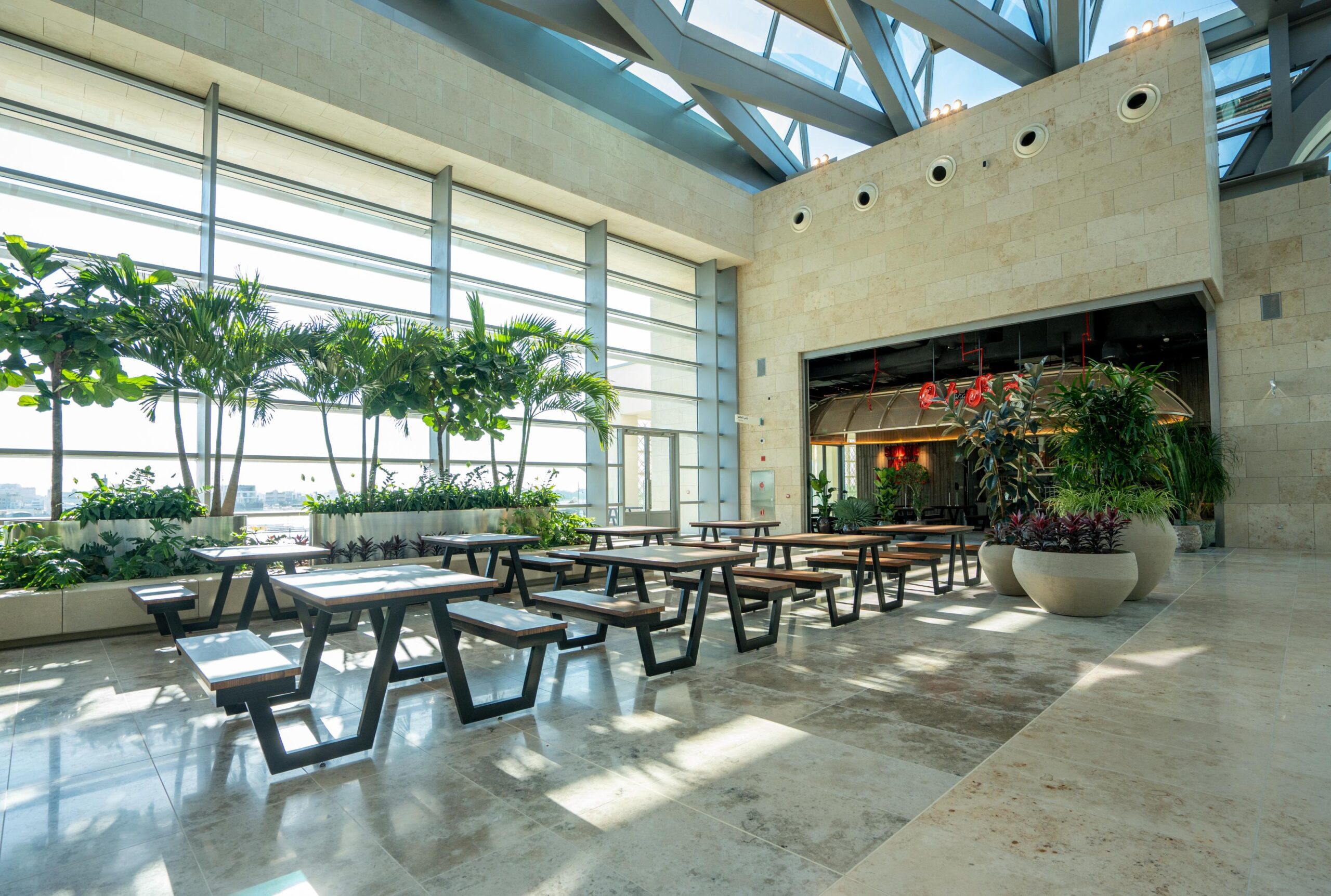
Natural light is one of the most transformative design elements in healthcare. Studies demonstrate that patients with access to natural daylight recover faster, experience less depression, sleep better, and require fewer pain medications. Natural light regulates circadian rhythms, which is essential for patient healing and staff alertness.
In Kuwait’s context, strategic window placement, light wells, and skylights can introduce natural light while sophisticated shading systems (inspired by traditional mashrabiya screens) prevent excessive heat gain. Healthcare professionals spending hours under natural light report significantly lower stress levels and higher job satisfaction.
Green Elements and Indoor Gardens

Indoor plants, vertical gardens, and dedicated green spaces provide multiple benefits for healthcare environments. Beyond improving air quality, greenery creates psychological calm, reduces anxiety, and accelerates healing. Staff areas with green spaces become restorative zones where healthcare professionals can recover mentally during brief breaks.
Natural Materials and Finishes
Incorporating natural wood, stone, and earth tone materials creates warmer, more welcoming healthcare environments compared to sterile, synthetic finishes. These materials also support acoustic comfort—stone and wood naturally absorb sound better than hard surfaces, reducing noise-related stress and medical errors.
Employee Wellness Through Thoughtful Interior Design
Healthcare professionals are healthcare’s most valuable resource, yet they often work in environments that exacerbate stress and burnout. Strategic interior design directly supports staff mental health and operational excellence.
Dedicated Staff Rest and Recovery Spaces
Healthcare workers need private, restorative areas to recover during shifts. Dedicated staff break rooms with natural light, comfortable seating, and green elements significantly improve well-being. Some leading healthcare facilities include staff gardens, quiet zones, and wellness areas exclusively for healthcare professionals.
Optimized Workspaces for Efficiency

Workspace layout directly impacts staff fatigue. Proximity to supplies, medications, equipment, and workstations reduces physical and cognitive strain. Well-designed nursing stations, efficient patient room adjacencies, and clear traffic flows allow staff to focus on patient care rather than navigating confusing layouts.
Mental Health Support Through Environment
The cumulative effect of poor lighting, noise, and disconnection from nature manifests as burnout. Biophilic design elements—natural light exposure, views of nature, access to fresh air, and connection to green spaces—actively reduce stress and support mental health. Healthcare professionals exposed to natural daylight for at least three hours daily report substantially lower stress levels.
How Design Core Transforms Healthcare Spaces in Kuwait
Design Core Interiors specializes in creating wellness-focused healthcare environments that balance clinical functionality with human-centered design. Our approach addresses Kuwait’s unique challenges through:
- Climate-Responsive Design: Strategic use of natural light, ventilation, and passive cooling techniques that reduce heat stress while minimizing energy consumption
- Biophilic Integration: Thoughtful incorporation of natural elements, materials, and views that reconnect occupants with nature despite extreme exterior conditions
- Workflow Optimization: Space planning that enhances staff efficiency, patient flow, and infection control
- Staff Wellness Focus: Dedicated restoration spaces, improved lighting, and environmental controls that support healthcare professional well-being
For insights into how professional design companies approach commercial spaces, explore our comprehensive guide on interior design packages for every space Additionally, our expertise in biophilic office interior design directly informs our healthcare facility design, ensuring every project maximizes natural connections.
Conclusion
The importance of interior design for healthcare in Kuwait cannot be overstated. In a region where harsh climate forces extended indoor time, healthcare facility design becomes a critical clinical tool. Well-designed healthcare environments accelerate patient recovery, reduce staff stress, improve operational efficiency, and create spaces where healing genuinely occurs.
Kuwait’s healthcare facilities deserve design excellence that acknowledges both technical requirements and human wellness needs. By integrating biophilic design principles, optimizing workspaces, and prioritizing staff well-being, healthcare organizations can create environments that support every person within their walls.
Design Core Interiors is ready to transform your healthcare facility into a healing environment. Contact us today for a consultation on creating wellness-focused healthcare spaces that thrive despite Kuwait’s challenging climate.
Frequently Asked Questions: Healthcare Interior Design in Kuwait
Q: How does biophilic design work in Kuwait’s extreme heat?
A: Biophilic design in Kuwait requires climate-sensitive strategies. Rather than relying solely on outdoor access, designers use strategic natural lighting through skylights and light wells, incorporate green walls and indoor gardens in climate-controlled spaces, and use natural materials that create psychological connections to nature. Traditional shading techniques and smart window placement prevent heat gain while maximizing beneficial natural light.
Q: What’s the most cost-effective way to improve healthcare facility design?
A: Natural light optimization offers excellent return on investment. Strategic window placement, skylights, and improved lighting design provide immediate benefits for patient recovery and staff well-being without requiring extensive renovation. Optimizing staff spaces and adding accessible green elements also provide significant wellness improvements at reasonable costs.
Q: How does interior design reduce healthcare-associated infections?
A: Proper space planning ensures adequate separation between patient care areas and non-sterile zones. Sound-absorbing materials and good ventilation design support HVAC efficiency. Natural materials and finishes that age gracefully reduce maintenance issues. Clear layouts prevent cross-contamination and support proper cleaning protocols.
Q: Can healthcare facilities maintain sustainability while prioritizing wellness?
A: Absolutely. Biophilic design principles are inherently sustainable. Natural light reduces artificial lighting needs, natural ventilation reduces mechanical system strain, and natural materials are often more durable and lower-impact. Staff wellness directly reduces turnover and training costs. Patient recovery acceleration reduces facility burden and resource consumption.
Q: What specific design elements benefit healthcare staff most?
A: Natural light exposure (particularly 3+ hours daily), dedicated rest areas with green elements, optimized workspace layouts that reduce unnecessary movement, and noise reduction through acoustic materials provide the most measurable staff wellness benefits. Access to outdoor views and restoration spaces significantly impacts mental health and job satisfaction.
Q: How long does healthcare facility redesign typically take?
A: Timeline varies based on project scope. Minor improvements like lighting optimization and staff area upgrades can be implemented relatively quickly. Full-scale facility redesign requires comprehensive planning, regulatory compliance, and phased implementation. Design Core’s project management expertise ensures efficient execution that minimizes disruption to operations.
Q: Is biophilic design applicable to all healthcare facility types?
A: Yes. From small clinics to large hospitals, diagnostic centers to rehabilitation facilities, biophilic principles can be adapted to your specific needs and constraints. Every healthcare setting benefits from natural light, air quality optimization, and staff wellness focus.
Q: How does climate-responsive design specifically benefit Kuwait healthcare facilities?
A: Kuwait’s extreme heat creates unique design challenges. Climate-responsive strategies reduce reliance on excessive air conditioning (lowering operational costs), minimize the psychological stress of complete indoor isolation, and create more comfortable patient environments that support faster recovery. Strategic design addresses both thermal comfort and wellness simultaneously.