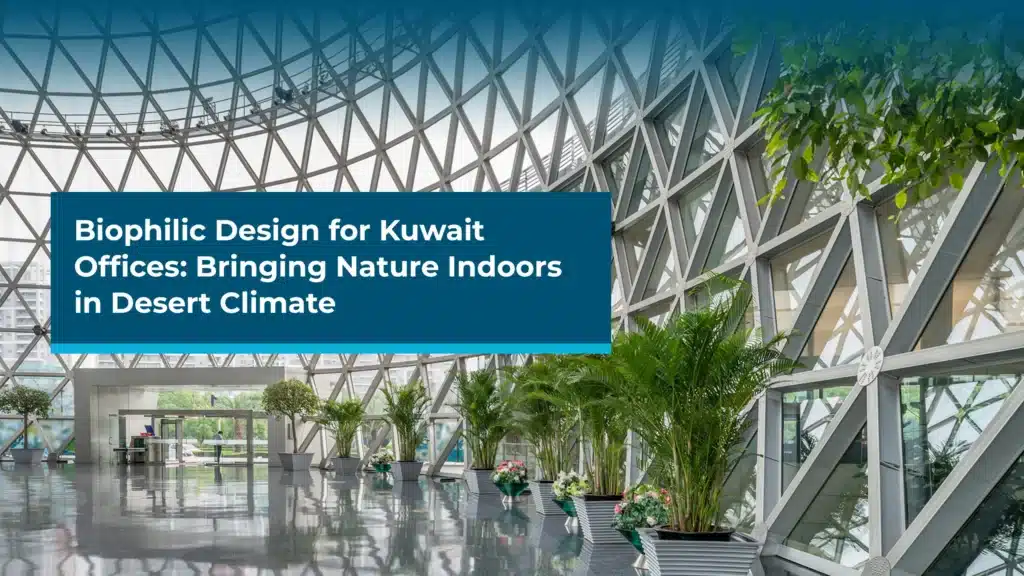
Kuwait’s scorching desert climate and modern urban development have created a challenge for office designers: how can companies create workspaces that feel connected to nature when the environment outside is harsh and unforgiving? The answer lies in biophilic design for Kuwait offices, a transformative approach that brings the restorative power of nature indoors.
Biophilic office design Kuwait represents far more than decorating with a few potted plants. It’s a comprehensive design philosophy that acknowledges human beings’ inherent need to connect with nature, even in the heart of the desert. As Kuwait continues to develop as a global business hub, forward-thinking organizations are discovering that green interiors for desert climate create healthier, more productive, and more engaged workforces.
In this comprehensive guide, Design Core Interiors explores how biophilic design for Kuwait offices can transform your commercial spaces into thriving natural environments, benefiting both employee wellbeing and business performance.
What is Biophilic Design in Office Spaces?
Biophilic design is rooted in the biophilia hypothesis—the idea that humans possess an innate psychological need to connect with nature and living systems. This principle recognizes that despite spending approximately 90% of our time indoors, our bodies and minds evolved in natural environments filled with daylight, greenery, natural materials, and water.
In the context of office design, biophilic office design Kuwait goes beyond simply adding plants to a space. Instead, it incorporates multiple layers of natural elements:
- Living green walls and vertical gardens
- Abundant natural light through strategic window placement
- Water features and natural sounds
- Natural building materials like wood, stone, and bamboo
- Views of nature or nature-inspired patterns
- Fresh air circulation and improved ventilation
- Organic shapes and natural color palettes
For Kuwait offices operating in one of the world’s most challenging climates, green interior design desert climate requires thoughtful integration of these elements while managing extreme heat, intense solar radiation, and limited outdoor greenery. The solution is creating internal ecosystems that thrive within climate-controlled environments.
Why Biophilic Design Matters in Kuwait’s Desert Climate
Kuwait faces unique environmental challenges that make biophilic office design Kuwait particularly valuable. With temperatures exceeding 50°C during summer months, harsh dust storms, and minimal natural vegetation in the urban landscape, the contrast between outdoor and indoor environments is extreme.
Traditional office design in Kuwait has typically relied on heavy air conditioning and artificial lighting to combat the desert climate. However, this approach creates sterile, disconnected workspaces that do little to support employee wellness. Green interiors for desert climate address this by creating microclimates within offices that provide psychological comfort and physical wellbeing.
Research consistently demonstrates that exposure to natural elements—even simulated or recreated indoors—significantly impacts human health and productivity. In desert regions like Kuwait, where outdoor time during business hours is largely impractical, biophilic design becomes not a luxury, but a necessity for creating healthy workplaces.
Key Benefits of Biophilic Office Design for Kuwait Employees
Enhanced Productivity and Cognitive Function
The most compelling benefit of biophilic office design Kuwait is its demonstrable impact on work performance. Studies show that employees working in biophilically designed spaces experience productivity increases of 8-11%. Natural light alone can boost productivity by these margins while supporting healthy circadian rhythms.
When offices incorporate living plants and green walls, concentration levels improve significantly. Research indicates that just the presence of potted plants in an office can increase productivity by 15%, while memory and cognitive function improve by 14%. These gains directly translate to better output, fewer errors, and enhanced problem-solving capabilities—critical advantages in Kuwait’s competitive business environment.
Stress Reduction and Mental Wellbeing
The harsh desert climate and fast-paced business culture of Kuwait can create significant workplace stress. Biophilic design for Kuwait offices provides a powerful antidote. Exposure to natural elements and greenery reduces cortisol levels, the primary stress hormone, creating a calmer psychological state.
Scientific evidence shows that workplaces with biophilic elements reduce employee stress by measurable amounts. Green-certified offices have been shown to reduce sick days by 30%, directly improving organizational productivity and reducing healthcare costs. Just viewing nature—even through office windows or nature-inspired artwork—can lower blood pressure and reduce anxiety.
Improved Air Quality and Respiratory Health
In the context of Kuwait’s air quality challenges during dust storm seasons, green interiors for desert climate provide tangible benefits. Plants naturally filter indoor air by absorbing carbon dioxide and producing oxygen while removing volatile organic compounds (VOCs) from paint, furniture, and office equipment.
The World Health Organization estimates that poor indoor air quality affects approximately 30% of office buildings globally, with implications for employee respiratory health and general wellbeing. By incorporating living green walls and strategic plant placement, Kuwait offices can dramatically improve air quality while reducing dependence on mechanical air purification systems.
Enhanced Creativity and Innovation
Biophilic environments stimulate the creative centers of the human brain. Exposure to natural forms, patterns, and colors activates different cognitive pathways than sterile, artificial environments. For Kuwait’s dynamic business sector—from finance to technology to creative industries—this enhanced creativity translates directly to competitive advantage.
Organizations that embrace biophilic office design Kuwait report higher levels of employee engagement with creative tasks, better collaborative problem-solving, and more innovative solutions to business challenges.
Increased Employee Attraction and Retention
In Kuwait’s competitive talent market, workplace environment has become a key differentiator in attracting and retaining top professionals. Companies with thoughtfully designed biophilic offices send a clear message: “We value your wellbeing and our environmental responsibility.”
A well-designed biophilic office design Kuwait space demonstrates organizational commitment to employee health and sustainability, making the company more attractive to talented professionals who increasingly prioritize workplace quality and values alignment. This is particularly important for attracting younger professionals who expect their employers to demonstrate social and environmental consciousness.
Implementing Biophilic Design Elements in Kuwait Offices
Living Green Walls and Vertical Gardens
For office spaces where floor space is limited, vertical green walls represent the most efficient use of space while creating maximum visual and psychological impact. These living installations can be integrated into interior walls, reception areas, and meeting spaces without requiring significant structural changes.
In Kuwait’s climate, selecting plant species that thrive in controlled indoor environments is essential. Suitable options include Pothos (Devil’s Ivy), Philodendrons, Snake Plants, and Dracaena varieties that are hardy, require moderate maintenance, and improve air quality significantly. Green walls also provide natural sound absorption, reducing noise levels in open-plan offices.
The thermal benefits of green walls are particularly valuable in desert climates. Research demonstrates that vertical greening can lower interior wall surface temperatures by 2-3°C and indoor air temperatures by similar amounts, reducing cooling requirements and energy consumption.
Strategic Natural Lighting Design
Maximizing natural light is fundamental to biophilic office design Kuwait. This involves:
- Positioning workstations near windows to maximize daylighting
- Using glass partitions instead of solid walls to distribute light throughout the office
- Installing skylights and light wells in interior spaces
- Implementing automated shading systems that allow light in while managing solar heat gain
- Using light-colored surfaces that reflect and distribute natural light effectively
For Kuwait offices, managing intense solar radiation is critical. High-performance glazing, strategic overhangs, and traditional mashrabiya-style screens provide both cultural authenticity and practical light control while reducing the need for artificial lighting and air conditioning.
Water Features and Natural Sounds
The gentle sound of moving water creates profound psychological calming effects. In Kuwait offices, water features serve multiple functions:
- Psychological restoration through natural sounds
- Visual interest and aesthetic enhancement
- Humidity increase in dry desert climates
- Connection to traditional Kuwaiti architectural elements like fountains and water features
Small fountains, water walls, or recirculating water features in reception areas or break spaces create focal points that draw employees and visitors, encouraging dwell time and stress reduction.
Natural Materials and Textures
Incorporating natural materials—wood, stone, cork, and natural fabrics—creates sensory richness that artificial materials cannot replicate. These materials:
- Provide visual warmth and texture
- Connect occupants to natural origins
- Often perform better than synthetic alternatives (better acoustics, thermal properties)
- Support sustainability goals through responsible sourcing
For Kuwait offices, specifying FSC-certified wood, reclaimed wood, and locally-sourced natural stone demonstrates both biophilic commitment and environmental responsibility. The aesthetic warmth of natural materials contrasts beautifully with the harsh desert exterior.
Color Palettes Inspired by Nature
Biophilic design employs nature-inspired color schemes featuring earth tones, soft greens, warm browns, and sky blues. These colors:
- Reduce mental fatigue and eye strain
- Create psychologically restorative environments
- Support focus and concentration
- Feel inherently calming and pleasant
For green interiors for desert climate, muted sage greens, soft sand tones, and warm terracottas connect the interior environment to natural desert aesthetics while creating spaces that feel cooler and more comfortable than bright, artificial color schemes.
Natural Ventilation and Air Movement
Where climate permits, incorporating natural ventilation principles improves air quality and creates sensory connection to outdoor environments. In Kuwait, this might include:
- Operable windows in spaces where air quality and temperature permit
- Ventilation strategies that harness cooler evening and morning air
- Atrium designs that naturally circulate air
- Cross-ventilation planning in office layouts
Even when mechanical cooling is necessary, design that acknowledges natural ventilation principles creates more resilient, adaptable spaces.
Biophilic Design Integration with Kuwait’s Sustainability Goals
Kuwait’s commitment to environmental responsibility aligns perfectly with biophilic design principles. The nation’s focus on sustainable development makes biophilic office design Kuwait not merely a wellness trend, but a strategic alignment with national priorities.
Green interiors for desert climate support Kuwait’s broader sustainability goals through:
- Reduced energy consumption (green walls and natural ventilation decrease cooling loads)
- Improved water efficiency (plant-based biophilic elements use less water than traditional landscaping)
- Carbon footprint reduction (natural materials and lower mechanical system demands)
- Support for local biodiversity (indoor green spaces create micro-ecosystems)
- Enhanced property values and market positioning
Organizations implementing biophilic design in Kuwait offices position themselves as forward-thinking, responsible corporate citizens while simultaneously improving operational efficiency and employee performance.
Real-World Examples: Biophilic Design Success in the Gulf Region
The Heriot Watt University Dubai Campus demonstrates biophilic design excellence in the Gulf context. This seven-story office and learning space features:
- Interior green walls running through all levels
- Natural materials inspired by Scottish heritage adapted to desert context
- Strategic views toward palm trees and water
- Laser-cut mashrabiya screens that filter sunlight traditionally
- Abundant natural light with sophisticated glare management
This project proves that biophilic principles can be successfully implemented in extreme climates when thoughtfully designed. Similarly, Kuwait offices can draw inspiration from such examples while creating uniquely Kuwaiti interpretations of biophilic design.
Addressing Common Concerns About Biophilic Office Design in Kuwait
Budget Considerations
A frequent objection to biophilic office design Kuwait is perceived cost. However, when viewed over the lifecycle of a space:
- Energy savings from reduced cooling needs (green walls lower temperatures 2-3°C)
- Productivity gains worth thousands per employee annually
- Reduced absenteeism (green offices reduce sick days by 30%)
- Lower turnover and recruitment costs
The return on investment for biophilic design typically exceeds initial costs within 2-3 years, making it a financially sound decision alongside a wellness commitment.
Maintenance Requirements
Modern biophilic design incorporates low-maintenance plant selections and automated irrigation systems suitable for Kuwait’s climate. Professional landscape maintenance services ensure green walls and plantings thrive with minimal disruption to office operations.
Space Limitations
Even compact Kuwait offices can incorporate biophilic elements:
- Vertical gardens maximize limited floor space
- Small potted plants create psychological benefits
- Nature-inspired artwork and materials provide biophilic impact
- Strategic window placement and natural light maximize available resources
Biophilic Design Case Study: Commercial Office Implementation
A typical Kuwait office renovation using biophilic office design Kuwait principles might include:
Reception Area:
- Green living wall accent featuring hardy indoor plants
- Natural stone flooring with warm earth tones
- Large windows with strategic shading for natural daylight
- Small water feature creating ambient sound
Open Workspace:
- Cluster plants around collaborative work zones
- Maximize window positioning for natural light
- Use wood and natural materials in furniture and finishes
- Incorporate nature-inspired artwork
Meeting Spaces:
- Views toward green walls or natural elements
- Wood-finish conference tables with stone accents
- Natural lighting with glare-control measures
- Small plants creating visual interest
Break and Wellness Areas:
- Dedicated biophilic zones with plants and water features
- Comfortable seating with views of nature elements
- Natural materials throughout
- Connection to outdoor views where possible
This integrated approach creates cohesive biophilic experiences rather than isolated green elements.
FAQ: Biophilic Design for Kuwait Offices
Q: How much does biophilic office design cost compared to traditional design?
A: Initial costs may be 5-15% higher, but long-term savings from reduced energy consumption, improved productivity, and lower absenteeism typically recover this investment within 2-3 years. Over a 10-year office lifecycle, biophilic design proves significantly more cost-effective.
Q: Do plants require extensive maintenance in Kuwait’s dust-heavy environment?
A: Modern biophilic design uses professional-grade automated irrigation systems and low-maintenance plant species specifically selected for indoor office environments. Professional maintenance services ensure plant health with minimal office disruption.
Q: Can biophilic design work in small Kuwait offices?
A: Absolutely. Vertical gardens, strategic window placement, natural materials, and nature-inspired elements can create biophilic impact in spaces of any size. Even small potted plants provide documented cognitive benefits.
Q: Does biophilic design reduce air conditioning effectiveness?
A: No. In fact, green walls and improved natural ventilation reduce cooling loads, making air conditioning more efficient. The combination of biophilic design with smart climate control creates superior results.
Q: What plant species thrive in Kuwait office environments?
A: Hardy indoor varieties like Pothos, Philodendrons, Snake Plants, ZZ Plants, and Dracaena perform well. Professional landscape designers select species based on specific office light and humidity conditions.
Q: How does biophilic design support employee wellness specifically?
A: Biophilic elements reduce stress hormones, improve air quality, support healthy sleep cycles through natural light exposure, enhance cognitive function, and create psychologically restorative environments where employees feel more engaged and satisfied.
Q: Is biophilic design suitable for traditional corporate Kuwait offices?
A: Yes. Biophilic design can be implemented at any aesthetic level, from contemporary minimalist to traditional luxury. It enhances rather than conflicts with existing design preferences.
Q: What’s the connection between biophilic design and white stone materials in office spaces?
A: White and light stone materials in biophilic design serve multiple functions: they reflect heat (important in hot climates), provide natural texture and visual interest, pair beautifully with green elements for contrast, and support the aesthetic principle of bringing natural materials indoors. Light stone aligners (linear architectural elements) in contemporary office design create clean aesthetic frameworks that complement organic biophilic elements, similar to how white stone aligner technology works in professional design—creating straight, clean lines that frame and organize natural, organic elements.
Conclusion: The Future of Kuwait Office Design
Biophilic design for Kuwait offices represents a strategic evolution in workplace environments. By connecting employees to nature, organizations create spaces that enhance productivity, sustainability, and wellbeing. Kuwait’s harsh desert climate strengthens the case for incorporating natural elements indoors—creating internal ecosystems that are psychologically essential and competitively advantageous. This trend reflects corporate recognition that workspace design impacts business performance. Whether designing new offices or reimagining existing spaces, biophilic principles position your organization at the forefront of workplace innovation. For comprehensive guidance on implementing these designs, consult Design Core Interiors’ latest insightson transforming commercial spaces.